First Author, ACM COMPASS '23 · with Dr. Rama Adithya Varanasi (NYU) & Dr. Nicola Dell (Cornell)
Human-Centered Computing: Empirical Studies in HCI
How low-income school teachers dealt with stress during the shift to hybrid education post-COVID.
Technology is generally built to improve productivity and reduce stress. However, in low-resource, low-income settings, technology itself can become a source of stress. During the pandemic, the shift to hybrid education caused teachers to experience isolation and burnout — though technology also served as a medium of support. We studied the stress teachers experienced and the support systems they used, then presented design recommendations for a tech-based support solution.
Methods
- Thematic analysis of 28 multilingual interviews (Hindi, Marathi, English) with teachers and school management
- Literature synthesis to build the theoretical framework and support cross-cultural analysis of technology, social support, organizational structures and well-being
Accepted at ACM CSCW '26
Between Implications for Design and the Implication Not to Design
Does good design always mean building something new?
Instead of always chasing the creation of new tools, this paper argues that the more valuable contribution is often studying and redesigning the technology people already use.
Methods
- Long-term qualitative engagement with a legal nonprofit, shifting from building a novel system to redesigning existing information-management practices
Will update more once the paper gets published.
Under review at IJHCI '26
Identifying the Types of Feedback Users Provide During Algorithmic System Design
What kinds of feedback do people actually give vs. what designers expect?
Users provide valuable feedback when it comes to designing algorithmic systems. However, it's important to know what users comment on, how they express it, and how the format of engagement itself affects what feedback is received. Using data collected from five years of participatory design, we identify and close the gap between what feedback designers expect vs. what users actually provide.
Methods
- Semi-structured interviews
- Speculative workshops
- Think-aloud sessions
Will update more once the paper gets published.
Ruhr Fellowship · Technical University of Dortmund · Summer 2025
Entrepreneurial Well-Being Across Cultures
How do entrepreneurs experience and manage well-being across cultures?
Entrepreneurship looks different depending on where you are, and so does the toll it takes on the people doing it. This study compares the well-being needs of entrepreneurs across three startup ecosystems: Ruhr, Lehigh, and Silicon Valley — what's working, what challenges persist, and what kinds of support systems could truly make a difference.
Methods
- Literature synthesis of 50+ academic papers to build a theoretical framework and inform a grant submission
- Participant recruitment via snowball sampling and cold outreach, resulting in 10 interviews
- Semi-structured interviews and analysis, synthesizing findings for academic and institutional stakeholders
Independent study · with Dr. Felipe Augusto de Araujo · Jan–May 2026
Framing, Expectations, and Trust in Algorithmic Advice
Can a label save your trust in AI? And, exactly how many mistakes would it take for you to lose trust in AI?
People often stop trusting an AI's advice the moment it makes a mistake, but it's unclear how much that depends on how the AI was described beforehand. This study tests whether calling an AI a "learning" system makes people more forgiving of an early error than calling it fixed, and whether setting high expectations upfront makes a mistake feel like a bigger betrayal.
Methods
- Literature synthesis across algorithm aversion, prospect theory, and expectation violation theory
- 2×2 experimental design manipulating AI labeling (learning vs. static) and expectation framing (high vs. low)
Global Social Impact Fellowship 2023 · Best Paper Award, GHTC '23
How Teacher Feedback Helped Reimagine, Redesign, and Recode Save Tuba
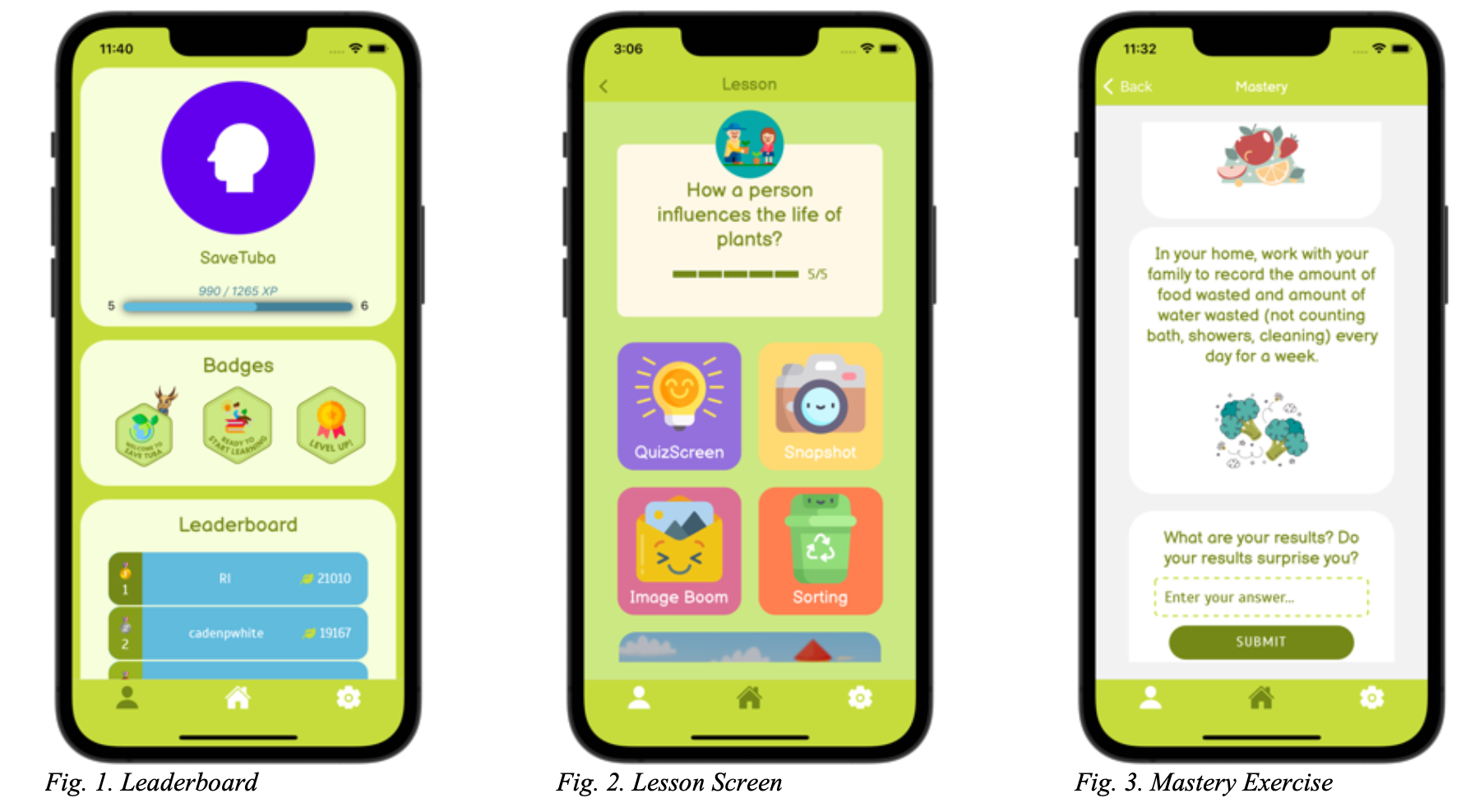
How teacher feedback shaped a sustainability education app.
This paper details how teacher feedback from focus groups shaped the redesign of Save Tuba, a sustainability-education app for elementary-school
students in Kazakhstan.
Methods
- 6 Focus groups with 30+ users across Kazakh- and Russian-medium schools during in-field deployment in Kazakhstan
- Synthesized qualitative findings to new product features related to gamification and inquiry-based learning
- Localized content and interaction design for a multilingual, cross-cultural user base